
From a childhood farm to the role of a teacher
“People care more and more about where their food comes from and how it is produced,” says Kristjan Reino, a livestock teacher at Järvamaa Kutsehariduskeskus (JKHK), who has been working as a vocational teacher for four years. His love for animals dates back to childhood – Kristjan was born on a farm and grew up surrounded by animals. During his studies, he was seen as a natural fit for becoming a teacher as well, to pass his knowledge on to others, and so he began working as a teacher in 2018. “I have been interested in animals for as long as I can remember,” Kristjan recalls. Having already visited quite a few cattle farms, he decided to complete his internship at the Ekseko pig farm in Viljandi County, owned by AS Rakvere Farmid, a subsidiary of Maag Eesti AS. “I stand for ensuring that students studying agriculture at the vocational upper secondary level have the opportunity during their studies to become familiar with animal species other than cattle, as the current focus has shifted more toward cattle,” he notes, adding that there is also interest in pig farming. At the Estonian Agricultural Annual Exhibition, he met Kalev Korbun, Director of Pig Farming at AS Rakvere Farmid, and they discussed the realities of pig farming and the development of pig farming studies at JKHK.“As a vocational teacher, I need to complete internships from time to time, and that’s how the idea came about – why not do it at Ekseko? By complying with all biosecurity and company regulations, it was not difficult to go to Ekseko, and I received a very warm welcome from the team there,” he says with satisfaction.
The internship lasted five days, and each day Kristjan worked in a different department. “I started in the boar station and finished in the finishing unit. I took part in the daily tasks and routines of each department to understand life at a pig farm and the work carried out there. Everyone was very supportive and shared advice every step of the way,” he says, considering the internship a complete success.“ It’s hard to highlight any particular moments, as every day was filled with interesting tasks. I felt like a child in a candy store! Of course, it was very exciting in the boar station to encounter such a powerful animal as a boar. Hats off to the women who work with boars every day – not everyone could handle that. Assisting a sow during farrowing was also a memorable experience.”
In Kristjan’s opinion, Ekseko offers excellent opportunities to contribute to pig farming education, as it is the largest pig farm in Estonia. “Considering the current situation, I believe the cooperation between the parties will be active and fruitful. Pork remains the number one meat on Estonians’ tables compared to other types of meat. We must continue to maintain the quality of production and ensure very good living conditions for the animals, because that is where good, high-quality products come from. Due to the spread of African swine fever in Estonia, pigs disappeared from the everyday reach and sight of ordinary people – we need to bring pigs closer to the public again,” Kristjan explains. He emphasizes that the issues related to the lack of young people entering the livestock sector and the labor shortage in agriculture should be addressed starting from kindergarten. “Very few family farms remain that would provide the next generation. Today’s young people have little to no understanding of animals, agriculture, or where the food on our tables comes from. As a result, misconceptions have emerged about animal husbandry and raising animals for food. By raising animals properly and ensuring their welfare, they can grow and produce high-quality products that we can later enjoy on our tables,” he concludes.
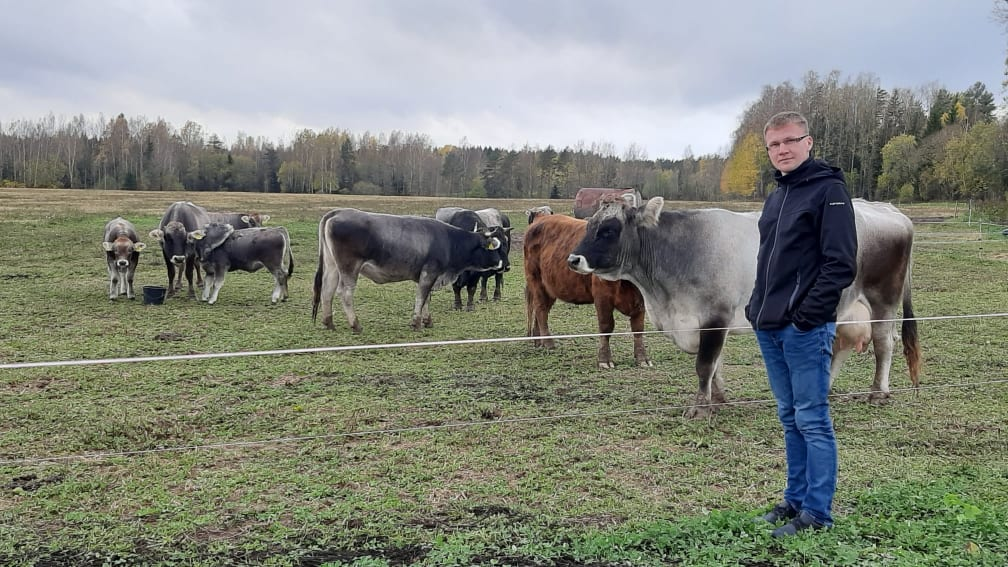
Although Kristjan is pictured with cattle, he also plays an important role in introducing pig farming.
Photo: private collection.
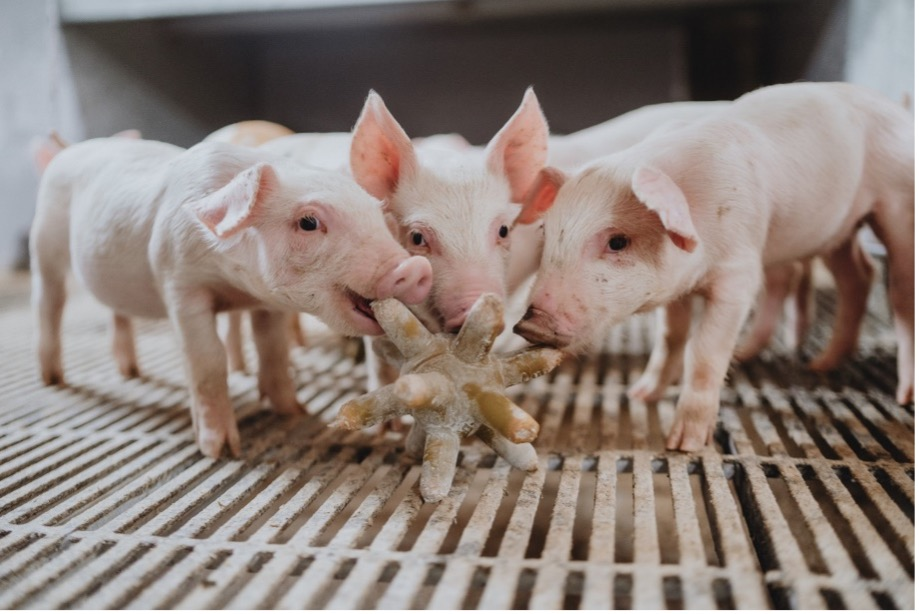
Piglets at the Ekseko pig farm.
Photo: Maag Eesti AS